History
The story of the hen
Long before an official table tried to say exactly which birds were “hens and pullets laying eggs for eating,” people kept a few hens at the edge of another kind of farm. Later came a government quality mark, ration books, a Lion on the box, paraffin incubators, and a survey that can record an empty shed as zero.
A sideline, then a National Mark
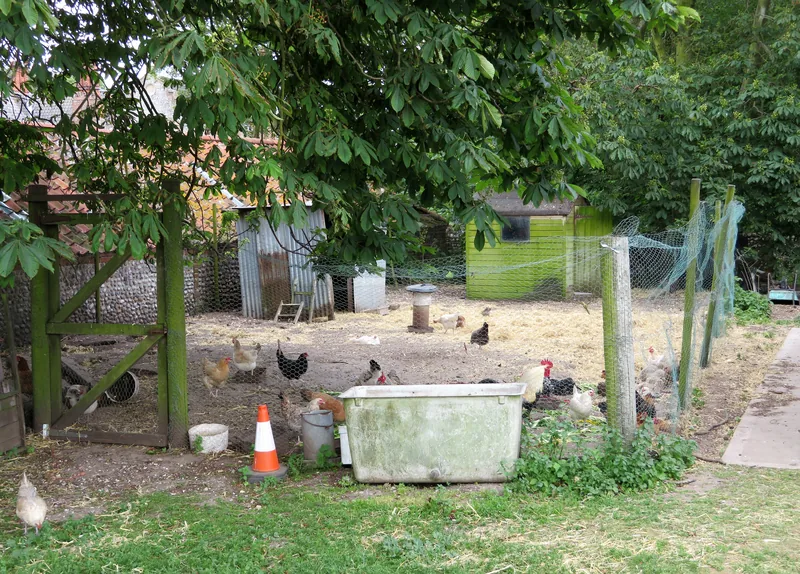
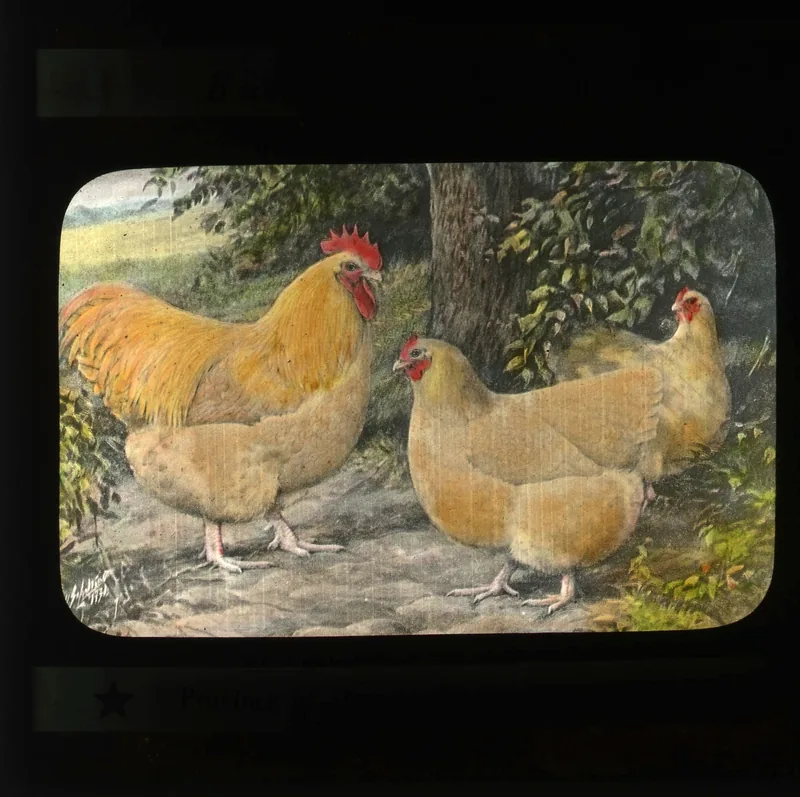
The British Egg Industry Council’s official history begins in a world that is easy to forget. “In the early years of the 20th century, egg production was largely a sideline to other farming operations and there were few specialist egg producers.” Prices fluctuated, and there was strong competition from overseas. [source]
In 1928, that history records, the Government and the Farmers’ Union set up a voluntary scheme “to try to provide a quality guarantee for a range of home-produced goods, including eggs.” The National Mark Scheme was “the first organised attempt to provide the market with reliably-graded, high quality, home-produced eggs.” [source]
Rationing that outlasted the war
During the Second World War, the same official history says, eggs were rationed “to ensure everyone received their fair share, and consumers were given vouchers which they used to buy eggs.” A new organisation, the National Egg Distributors’ Association Limited (NEDAL), was set up to supply eggs. [source]
Then comes the sentence that still startles: “As the war progressed, a shortage of animal feed meant that the number of hens declined, forcing egg rationing to remain in place until 1953.” [source] The war in Europe had ended in 1945. The official history of the British egg still has people using egg vouchers eight years later, because there were not enough hens, because there had not been enough feed.

A Lion, a slogan, and a stamp that was removed
The official history places the British Egg Marketing Board in a chapter dated 1957–1971. The Board, it says, was set up to bring stability, so that producers could get the best possible returns and consumers a regular supply of high quality home-produced eggs at reasonable prices. It was funded from egg sales, government subsidy, and “income from taxes which egg producers had to pay.” [source]
Under the Board, “first quality” eggs “were required by law to be stamped to show their grade and with a number that could be used to locate the packing station from which the eggs originated.” To this, the Board added its own trademark — a Lion. “The ‘Little Lion’ became a well-known symbol, popular with consumers.” British egg producers with more than 50 hens had to be registered, and the Board “was obliged to accept for sale all eggs offered to it.” [source]
The advertising slogan “Go to Work on an Egg” was introduced, the history says, “and featured on TV ads with comedian Tony Hancock.” Advertising and other Board activities “saw egg consumption increase by about 14 per cent between 1957 and 1970.” [source]
There is a quieter official twist. “The Government removed the requirement to stamp eggs in 1968.” [source] The Board was replaced by the Eggs Authority in 1971, “and under this new direction, producers had to find their own markets. The Lion symbol was also dropped at this time.” [source]
Incubators that ran on paraffin
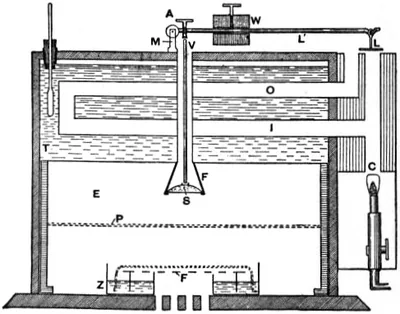
While marketing boards were arguing about stamps, the work of hatching had already been mechanised. The Science Museum Group holds an egg incubator called the “Junior 600” by Hearsons, about 1930, with water circulation, “paraffin heated.” [source] It also holds an egg incubator by Hebditch, about 1930, with convection-circulated air, also heated by paraffin. [source]
A 1911 encyclopaedia diagram on this page, marked simply “Hearson’s Incubator,” is earlier still: a public-domain illustration, not a photograph of the museum’s later cabinet. The idea was already in the reference books. The farm object, a few decades on, still smelled of lamp oil.
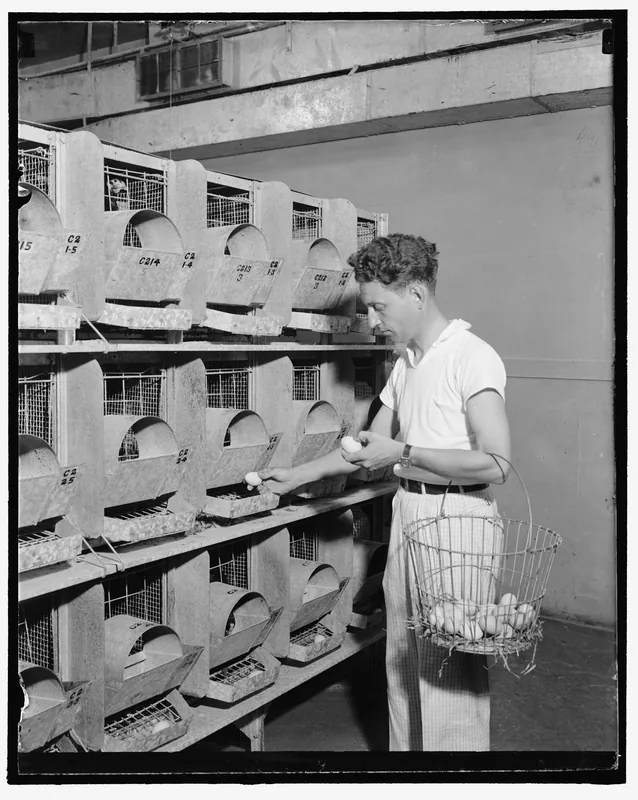
In 1938, on the other side of the Atlantic, Harris & Ewing photographed what a Library of Congress caption called “the first temperature controlled maternity ward for hens,” at a governmental experimental farm in Washington, D.C. [source] The automatic chute and the air-conditioning apparatus on the ceiling belong to that official caption, dated 8/9/38, and are not treated here as a British census.
The Lion comes back, and the cages change
The Eggs Authority, the official history says, was abolished in 1986 and replaced by the British Egg Industry Council, a voluntary organisation. In 1997, “a Salmonella Enteritidis vaccine is used for the first time in commercial egg layers.” The following year, “the British Lion Code of Practice is launched, requiring compulsory Salmonella vaccination for the first time.” In 2000 the Council “reintroduces the Lion Quality mark including best before date onto shells of all Lion eggs.” [source]
A Defra press release of 6 December 2011, headed “UK unites to stamp out battery cages,” said that an EU ban on battery cages would come into effect on 1 January 2012. From then, egg producers were “required to provide hens with larger and more comfortable cages, which include nesting and scratching areas that allow more natural behaviour.” The Animal Health and Veterinary Laboratories Agency, the same release said, would “use ultra violet light to identify batches of eggs that were not laid in the new, more welfare friendly cages.” [source] Council Directive 1999/74/EC, on legislation.gov.uk, is the European measure behind that date. [source]
By the 2020s the official count had its own peculiarities, which the desk and the figures page keep in their own places: a column headed “Hens and pullets laying eggs for eating,” a total of breeding and laying fowl that is not all poultry, and a rule that an empty shed on 1 June is recorded as zero animals. [source]
Enjoyed the henhouse?
No pop-ups. No intrusive advertising. Just interesting stuff. A little support helps the next farmyard site get built.