For families
Hen stories to share
Shorter tellings of the same researched stories, for reading aloud or for a curious afternoon. The surprising bits are still true, or clearly labelled when they come from a caption or a family account.
A house that was called a maternity ward
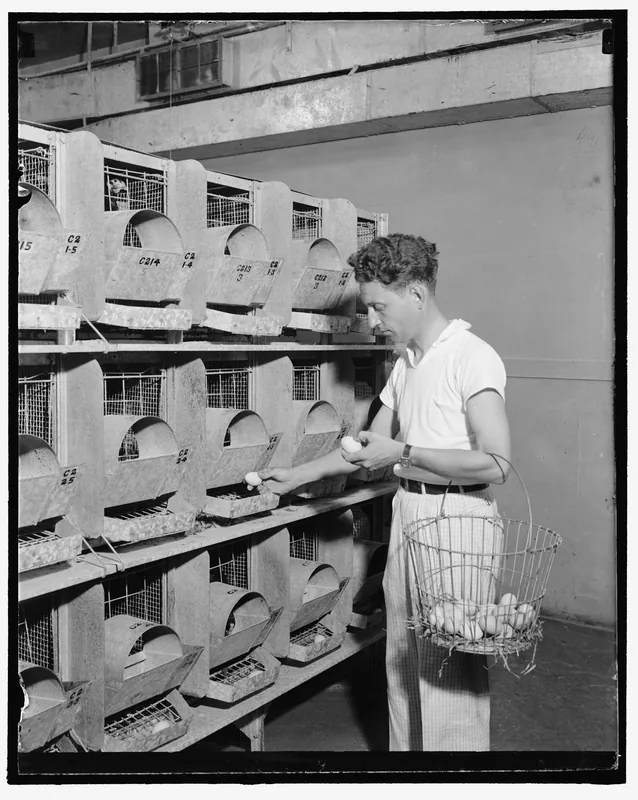
In 1938, in Washington, D.C., a photographer took a picture of a man collecting eggs from a chute in a hen house that had air conditioning on the ceiling. The official caption called it “the first temperature controlled maternity ward for hens.” [source] That is a 1938 American caption, not a British farm of today, and it is still one of the oddest official sentences on this site.
When eggs were still on the ration
During the Second World War, people in Britain used vouchers to buy eggs. The official history of the British egg says a shortage of animal feed meant there were fewer hens, and egg rationing stayed in place until 1953 — years after the war had ended. [source]
A cockerel called Mike
On 10 September 1945, on a farm in Fruita, Colorado, a bird later called Mike lived on after his head was cut off. A BBC feature, seventy years later, tells the family’s account, and uses a photograph from Life magazine. Mike is said to have lived for 18 months. The longer, careful telling is on its own page. [source]
What official figures actually count
When England counts “hens and pullets laying eggs for eating,” it is counting a named column in a table, not every bird on every farm. Table chickens, which are raised for meat, are most of the poultry total. And if a hen house is empty on the day of the count, the official number can be zero, even if the farm is still there. [source]
A game, and something to print
There is a quiz with explained answers, and a timeline game. If you would like a page to pin up, the free fact sheets are typographic — words and sources, no photographs — in A4 and US Letter.
Keep exploring
Enjoyed the henhouse?
No pop-ups. No intrusive advertising. Just interesting stuff. A little support helps the next farmyard site get built.